Yazmin Gonzalez ’16, M.A.’17
Latin American Studies


Latin American Studies
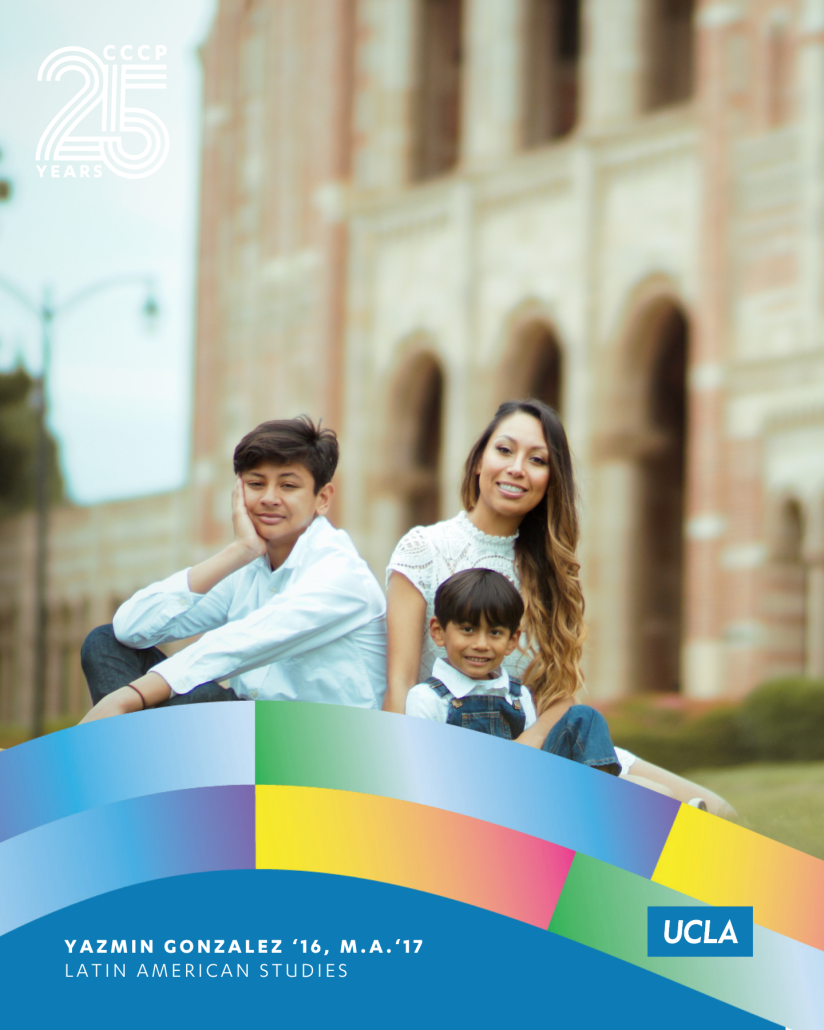
My journey to higher education has not been linear, but in many ways exactly what I needed. I am a 1.5-generation immigrant and a first-generation college student educated in the United States. By the time I embarked on the transfer pathway, I had already built a career in municipal government and had begun shaping my professional identity. What was clear to me then — and remains true today — was that being of service to others was central to that identity, even if the exact sector where that commitment would take root was still unfolding.
As a parenting and nontraditional student, I balanced academic aspirations alongside significant personal and professional responsibilities. This meant moving through higher education with a different sense of urgency and perspective than many of my peers. The path was longer and, at times, more complex, but those experiences sharpened my resilience and clarified my purpose. Each stage of this journey has shaped me not only as a scholar, but as someone deeply committed to expanding opportunity and supporting others who are navigating higher education along similarly unconventional paths.
I had the exceptional good fortune of meeting Santiago Bernal during my second week of enrollment at Pasadena City College. I was rushing to class, and I am certain the stress of a long day ahead must have shown on my face. He stopped to share information about the Center for Community College Partnerships (CCCP). The moment I heard the words “transfer to a UC,” I immediately knew I had to join. I began my time at Pasadena City College with the intention of transferring to UCLA, though at that point I wasn’t entirely sure how I would make it happen. That brief encounter felt serendipitous — like the kind of moment that quietly changes the direction of a life. Joining CCCP transformed my professional and intellectual trajectory. I became part of a vibrant community of social justice–oriented scholars, professionals and advocates. For the first time, I found a space where I could actively contribute to meaningful change: working to expand access pathways into higher education for others.
At CCCP, I was also affirmed, for the first time, as a rigorous and capable member of an intellectual community. I was celebrated during moments of triumph and supported through the inevitable challenges that come with pursuing higher education. CCCP became a chosen family — a place of encouragement, belonging and respite amid the ongoing academic, professional, parental and personal demands of my life.
CCCP’s Classic Site was one of my first truly memorable experiences at UCLA. Those three days immersed on campus were when I first claimed space at UCLA. Until then, UCLA had been an aspiration — something distant and almost abstract. But during that visit, something shifted. For the first time, I felt on a somatic level that I could, in fact, become a Bruin. I remember the mock lecture in Haines Hall vividly; sitting there, listening, observing, I felt a quiet clarity settle in. My goal crystallized in that moment: one day, not too far in the future, I would sit in those classrooms as a UCLA student.
Once I transferred, participating in the Transfer Summer Program was incredibly enriching. I remember discovering what became my perfect study spot in Young Research Library. I would sit surrounded by the Chinese classics collection, where natural light streamed through the large windows and rows upon rows of bookshelves stretched out in every direction. There was the faint smell of old books, the soft whispers of fellow students studying nearby, and the quiet rhythm of a campus alive with learning. In those moments — sitting there with my handwritten notes, a highlighter and my thoughts — I felt a deep and steady sense that I belonged at UCLA.
I also deeply cherish the opportunity to lead CCCP Summer Academies. I poured my heart and soul into those programs because I wanted CCCP scholars who were preparing to transfer to experience the same sense of possibility, community and affirmation that I had found. Helping create those spaces for others felt like a way of honoring the doors that had been opened for me. During my time at UCLA, I was fortunate to receive several scholarships and participate in a number of speaking engagements. But one of the most meaningful moments was serving as the student keynote speaker at the parenting student graduation. Standing there, addressing fellow parenting students, I felt the full weight of the journey we had all carried. Having my children walk with me wearing matching gowns was an incredibly powerful and emotional experience — one that reminded me that this journey was never mine alone.
I came to UCLA with a purpose. Over time, this institution and this community became my home — the place where I found my voice and began to fully understand the perspective I could bring to the world. Graduating from UCLA with both a bachelor’s and a master’s degree affirmed that my experiences, insights and commitments have a place in both intellectual discourse and the pursuit of social change. Earning those degrees with the highest honors from the nation’s top public university was deeply meaningful, not simply as a personal milestone, but as a testament to the transformative work of leaders such as Claudia Salcedo, Alfred Herrera, Santiago Bernal and others who have worked tirelessly to create pathways for students like me. Their leadership helped make it possible for students from nontraditional and historically underrepresented backgrounds to not only enter spaces like UCLA, but to thrive within them. The credentials I earned legitimized my skillset as a scholar-practitioner and gave me greater ease in navigating professional spaces that once felt distant. More importantly, the experience expanded my sense of what was possible. During my time at UCLA, I grew in leaps and bounds — intellectually, professionally and personally — and that growth continues to shape the work I do today.
I currently serve as the inaugural director of programs for student success within the division of engineering and applied science at the California Institute of Technology. In this role, I lead the design and implementation of holistic programs that support undergraduate and graduate students as they navigate one of the most rigorous academic environments in the world. My approach to this work is rooted in the legacy of the CCCP and in the belief that every student has the potential to excel when they are seen, heard and valued for their whole selves — not solely for their academic performance.
Creating structures that recognize students as complex individuals allows them to more fully engage with their intellectual pursuits and develop a stronger sense of belonging within academic spaces. This philosophy is deeply shaped by my own experiences at UCLA and CCCP. It was there that I first experienced the transformative power of education — not simply as a pathway to a degree, but as a process of cognitive liberation. I witnessed how access to community, mentorship and rigorous intellectual spaces can fundamentally reshape how students see themselves and what they believe is possible.
Alongside my professional work, I am currently completing my dissertation in the educational leadership program at UCLA. My research focuses on effective mentorship practices for Latinas in engineering doctoral programs, examining how mentoring relationships and broader mentoring ecosystems shape doctoral persistence and identity development. Through both my research and my professional practice, I remain deeply committed to expanding pathways, strengthening mentoring ecosystems and ensuring that future generations of scholars have the support they need to realize their full potential.
CCCP is far more than a transfer pathway program. It is an intergenerational disruptor that expands what is possible not only for individual students, but for their families, their communities and the populations they will one day serve. By creating structured pathways into institutions like UCLA, CCCP does more than help students reach a destination — it transforms how they see themselves and the roles they can play in society. Through mentorship, community and rigorous preparation, CCCP helps students develop the confidence and intellectual grounding to claim spaces that have historically been inaccessible to many of them. The impact extends well beyond the classroom. When a CCCP scholar succeeds, the ripple effects are felt across generations — within families who begin to see higher education as attainable, within communities that gain new advocates and leaders, and within the professions and institutions these students will eventually shape. In that sense, CCCP is not simply about transferring students from one institution to another; it is about shifting trajectories and expanding opportunity in ways that reverberate far beyond the university.
I am honored to be part of the CCCP family. One of the ways I express that gratitude is by paying forward the care, mentorship and belief that CCCP invested in me. The community that surrounded me through CCCP shaped not only my educational journey, but also my commitment to supporting others along their own paths. I look forward to seeing how CCCP continues to grow in the years ahead. Even in difficult times, its mission and impact remain steady: cultivating scholars, expanding opportunity and continuing to serve as a catalyst for meaningful change.
Help create more success stories like Yazmin’s by making a donation today.
 https://cccp.ucla.edu/wp-content/uploads/2026/08/1.png
1800
1440
brenda garcia
https://cccp.ucla.edu/wp-content/uploads/2025/03/CCCP_trim-1.png
brenda garcia2026-08-14 22:44:312026-08-14 23:02:11Della Mendivil ’18, M.Ed. ’21
https://cccp.ucla.edu/wp-content/uploads/2026/08/1.png
1800
1440
brenda garcia
https://cccp.ucla.edu/wp-content/uploads/2025/03/CCCP_trim-1.png
brenda garcia2026-08-14 22:44:312026-08-14 23:02:11Della Mendivil ’18, M.Ed. ’21 https://cccp.ucla.edu/wp-content/uploads/2026/07/1-4.png
1800
1440
brenda garcia
https://cccp.ucla.edu/wp-content/uploads/2025/03/CCCP_trim-1.png
brenda garcia2026-07-20 14:13:432026-08-11 18:38:46Aranzazu Medellin Guerrero ’13, M.A. ’20
https://cccp.ucla.edu/wp-content/uploads/2026/07/1-4.png
1800
1440
brenda garcia
https://cccp.ucla.edu/wp-content/uploads/2025/03/CCCP_trim-1.png
brenda garcia2026-07-20 14:13:432026-08-11 18:38:46Aranzazu Medellin Guerrero ’13, M.A. ’20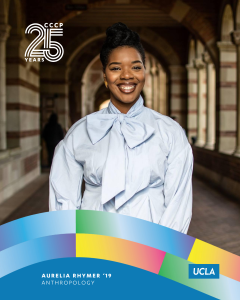 https://cccp.ucla.edu/wp-content/uploads/2026/07/1-2.png
1800
1440
brenda garcia
https://cccp.ucla.edu/wp-content/uploads/2025/03/CCCP_trim-1.png
brenda garcia2026-07-20 13:55:002026-07-20 14:07:07Aurelia Rhymer ’19
https://cccp.ucla.edu/wp-content/uploads/2026/07/1-2.png
1800
1440
brenda garcia
https://cccp.ucla.edu/wp-content/uploads/2025/03/CCCP_trim-1.png
brenda garcia2026-07-20 13:55:002026-07-20 14:07:07Aurelia Rhymer ’19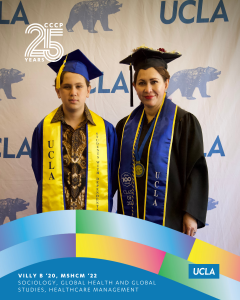 https://cccp.ucla.edu/wp-content/uploads/2026/07/1-1.png
1800
1440
brenda garcia
https://cccp.ucla.edu/wp-content/uploads/2025/03/CCCP_trim-1.png
brenda garcia2026-07-17 17:10:272026-07-20 14:09:05Villy B ’20, MSHCM ’22
https://cccp.ucla.edu/wp-content/uploads/2026/07/1-1.png
1800
1440
brenda garcia
https://cccp.ucla.edu/wp-content/uploads/2025/03/CCCP_trim-1.png
brenda garcia2026-07-17 17:10:272026-07-20 14:09:05Villy B ’20, MSHCM ’22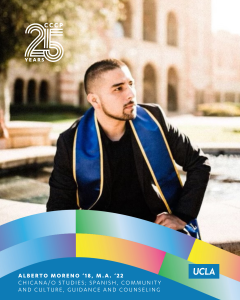 https://cccp.ucla.edu/wp-content/uploads/2026/07/Copy-of-CCCP25thAnniversary_Profiles_1080x1350_Template.pdf-43.png
1800
1440
brenda garcia
https://cccp.ucla.edu/wp-content/uploads/2025/03/CCCP_trim-1.png
brenda garcia2026-07-17 16:38:192026-07-17 17:00:25Alberto Moreno ’18, M.A. ’22
https://cccp.ucla.edu/wp-content/uploads/2026/07/Copy-of-CCCP25thAnniversary_Profiles_1080x1350_Template.pdf-43.png
1800
1440
brenda garcia
https://cccp.ucla.edu/wp-content/uploads/2025/03/CCCP_trim-1.png
brenda garcia2026-07-17 16:38:192026-07-17 17:00:25Alberto Moreno ’18, M.A. ’22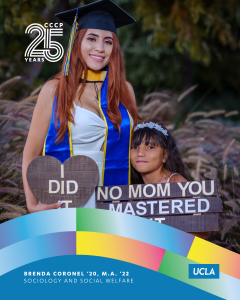 https://cccp.ucla.edu/wp-content/uploads/2026/07/Copy-of-CCCP25thAnniversary_Profiles_1080x1350_Template.pdf-29.png
1800
1440
brenda garcia
https://cccp.ucla.edu/wp-content/uploads/2025/03/CCCP_trim-1.png
brenda garcia2026-07-14 01:36:392026-07-15 00:35:57Brenda Coronel ‘20, M.A. ‘22
https://cccp.ucla.edu/wp-content/uploads/2026/07/Copy-of-CCCP25thAnniversary_Profiles_1080x1350_Template.pdf-29.png
1800
1440
brenda garcia
https://cccp.ucla.edu/wp-content/uploads/2025/03/CCCP_trim-1.png
brenda garcia2026-07-14 01:36:392026-07-15 00:35:57Brenda Coronel ‘20, M.A. ‘22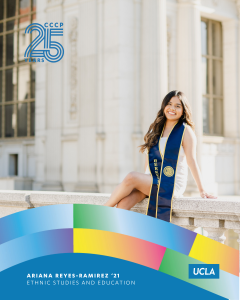 https://cccp.ucla.edu/wp-content/uploads/2026/07/Copy-of-CCCP25thAnniversary_Profiles_1080x1350_Template.pdf-24.png
1800
1440
brenda garcia
https://cccp.ucla.edu/wp-content/uploads/2025/03/CCCP_trim-1.png
brenda garcia2026-07-13 16:57:332026-07-15 16:28:38Ariana Reyes-Ramirez ’21
https://cccp.ucla.edu/wp-content/uploads/2026/07/Copy-of-CCCP25thAnniversary_Profiles_1080x1350_Template.pdf-24.png
1800
1440
brenda garcia
https://cccp.ucla.edu/wp-content/uploads/2025/03/CCCP_trim-1.png
brenda garcia2026-07-13 16:57:332026-07-15 16:28:38Ariana Reyes-Ramirez ’21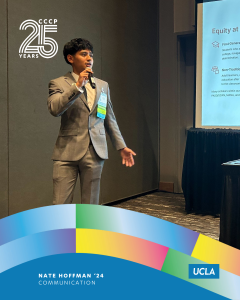 https://cccp.ucla.edu/wp-content/uploads/2026/07/61.png
1800
1440
brenda garcia
https://cccp.ucla.edu/wp-content/uploads/2025/03/CCCP_trim-1.png
brenda garcia2026-07-13 16:56:192026-07-15 16:42:09Nate Hoffman ’24
https://cccp.ucla.edu/wp-content/uploads/2026/07/61.png
1800
1440
brenda garcia
https://cccp.ucla.edu/wp-content/uploads/2025/03/CCCP_trim-1.png
brenda garcia2026-07-13 16:56:192026-07-15 16:42:09Nate Hoffman ’24
Contact Us
310.267.4441
cccp@college.ucla.edu
Open Hours
2211 Campbell Hall (2nd floor)
Los Angeles, CA 90095-7176
Monday – Thursday: 9am – 5pm
Friday (Remote): 9am – 5pm
The UCLA Center for Community College Partnerships acknowledges the Gabrielino/Tongva peoples as the traditional land caretakers of Tovaangar (the Los Angeles basin and So. Channel Islands). As a land grant institution, we pay our respects to the Honuukvetam (Ancestors), ‘Ahiihirom (Elders) and ‘Eyoohiinkem (our relatives/relations) past, present and emerging.
 Lupita Jimenez ’14