Mike Amezcua ’04
History and Chicana/o Studies


History and Chicana/o Studies
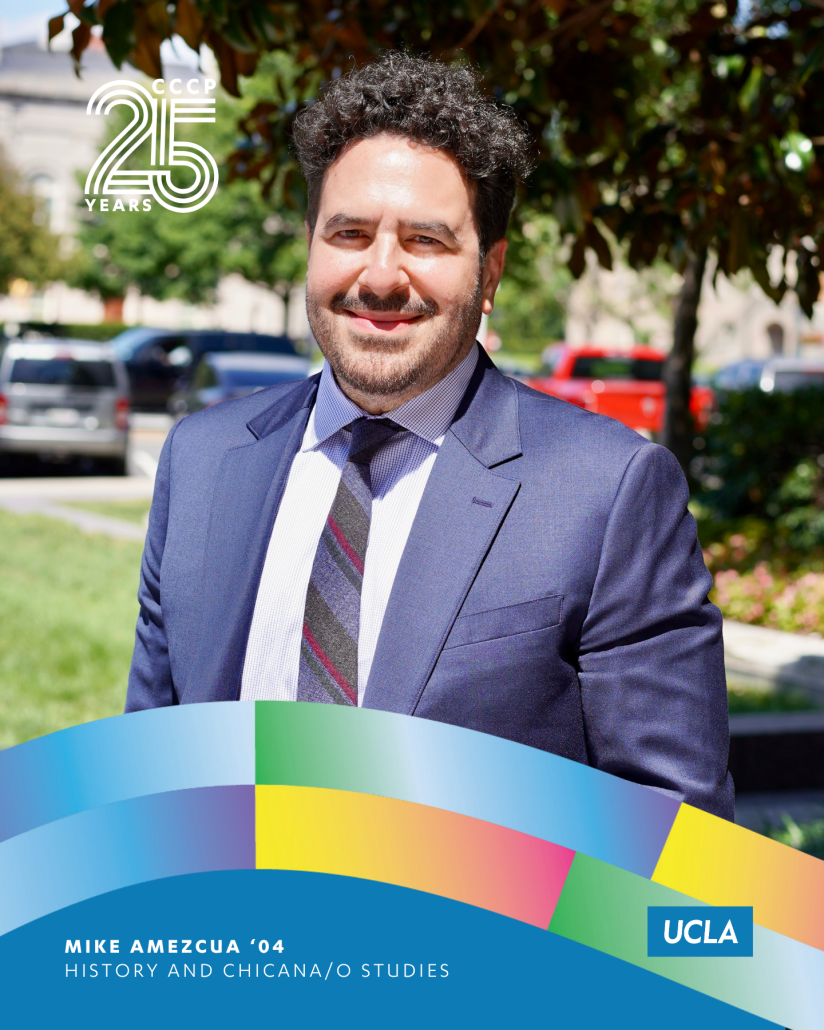
Growing up in a working-class, immigrant-dominant community in mid-city Los Angeles is something I cherish, but the LAUSD public schools I attended were not oriented toward preparing students for college. My high school operated with a punitive, detention-like culture that viewed its predominantly Black and Brown students through a lens of criminalization, as people to contain and control, rather than educate and prepare. Many of us were tracked into vocational programs: carpentry, auto shop, typing. That I finished high school with any aspirations toward higher education at all was, frankly, something of a miracle. What drew me to community college was a combination of two things: it was a natural next step for many students from socioeconomically disadvantaged communities like mine, and I had a genuine desire to recover some sort of academic foundation I had largely been denied in high school.
I succeeded pretty soon after enrolling in community college, getting good grades and honing my academic skills. Many of my professors there were incredibly dynamic educators committed to their craft. Their commitment made me want to be the best student I could be. Still, my future plans were not super ambitious. I had a general idea that I would try to transfer to a four-year college, but no real target as to where or how until I met Alfred Herrera, who was on a routine visit to my school. I was lucky enough to talk with him for a few minutes. He asked me what my transfer plans were, and I told him I wasn’t sure. He looked at my transcript and said, “With these grades, you can get into UCLA.” I was in disbelief. I couldn’t imagine a kid like me ever attending a school like UCLA. But Alfred made me believe, and from that point forward it became my goal. Once I got in, I was offered a full scholarship. From that point forward, Campbell Hall and Center for Community College Partnerships (CCCP) programs became my anchor. From being part of the Transfer Summer Program to receiving tutoring and book vouchers to inspirational workshops, CCCP made me feel like I belonged.
It was truly a dream come true to attend and graduate from UCLA. I excelled there. It set me on the path to becoming a historian. As an undergrad at UCLA, I learned how to do archival research, operate a microfiche machine and contextualize primary sources. I attended dozens of public lectures from visiting scholars. I had a work-study job as an undergraduate research assistant for one of my favorite professors, and I was able to write a senior honors thesis. I think graduating from UCLA, with the high caliber of faculty I was lucky enough to work for and learn from, really helped open doors for me as I began to think about graduate school. After graduating from UCLA, I moved to the East Coast to attend Yale University where I earned my Ph.D.
Now, I’m an associate professor of history at Georgetown University. I teach and write in the fields of U.S. history, Latino history, urban studies and histories of capitalism. My first book is called “Making Mexican Chicago: From Postwar Settlement to the Age of Gentrification” and it was published by the University of Chicago Press. It won three major book prizes and was widely reviewed in both scholarly and public outlets. I’m now writing the first Latino economic history of the United States, to be published by W.W. Norton.
The work and impact of the CCCP should serve as a model across the nation for other university systems. There is plenty of superficial talk from our political leaders about the value of community colleges, even as they attack and hollow out our institutions of higher education. Community colleges are vital access points to higher education for many people who don’t come from privileged or advantaged backgrounds.
The CCCP is the result of hard work from many leaders and advocates who thought seriously about this access point for the underserved and underrepresented, and built an entire infrastructure around it, bridging world-class research universities like UCLA with underserved communities. Having benefited from CCCP programs myself, I’ve seen firsthand how transformative that bridge can be for students who might otherwise never have had access to these opportunities. We need more of this, not less.
4’s up! Go Bruins!
Help create more success stories like Mike’s by making a donation today.
 https://cccp.ucla.edu/wp-content/uploads/2026/08/1.png
1800
1440
brenda garcia
https://cccp.ucla.edu/wp-content/uploads/2025/03/CCCP_trim-1.png
brenda garcia2026-08-14 22:44:312026-08-14 23:02:11Della Mendivil ’18, M.Ed. ’21
https://cccp.ucla.edu/wp-content/uploads/2026/08/1.png
1800
1440
brenda garcia
https://cccp.ucla.edu/wp-content/uploads/2025/03/CCCP_trim-1.png
brenda garcia2026-08-14 22:44:312026-08-14 23:02:11Della Mendivil ’18, M.Ed. ’21 https://cccp.ucla.edu/wp-content/uploads/2026/07/1-4.png
1800
1440
brenda garcia
https://cccp.ucla.edu/wp-content/uploads/2025/03/CCCP_trim-1.png
brenda garcia2026-07-20 14:13:432026-08-11 18:38:46Aranzazu Medellin Guerrero ’13, M.A. ’20
https://cccp.ucla.edu/wp-content/uploads/2026/07/1-4.png
1800
1440
brenda garcia
https://cccp.ucla.edu/wp-content/uploads/2025/03/CCCP_trim-1.png
brenda garcia2026-07-20 14:13:432026-08-11 18:38:46Aranzazu Medellin Guerrero ’13, M.A. ’20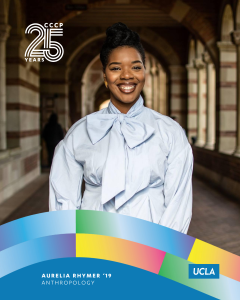 https://cccp.ucla.edu/wp-content/uploads/2026/07/1-2.png
1800
1440
brenda garcia
https://cccp.ucla.edu/wp-content/uploads/2025/03/CCCP_trim-1.png
brenda garcia2026-07-20 13:55:002026-07-20 14:07:07Aurelia Rhymer ’19
https://cccp.ucla.edu/wp-content/uploads/2026/07/1-2.png
1800
1440
brenda garcia
https://cccp.ucla.edu/wp-content/uploads/2025/03/CCCP_trim-1.png
brenda garcia2026-07-20 13:55:002026-07-20 14:07:07Aurelia Rhymer ’19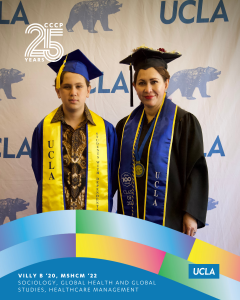 https://cccp.ucla.edu/wp-content/uploads/2026/07/1-1.png
1800
1440
brenda garcia
https://cccp.ucla.edu/wp-content/uploads/2025/03/CCCP_trim-1.png
brenda garcia2026-07-17 17:10:272026-07-20 14:09:05Villy B ’20, MSHCM ’22
https://cccp.ucla.edu/wp-content/uploads/2026/07/1-1.png
1800
1440
brenda garcia
https://cccp.ucla.edu/wp-content/uploads/2025/03/CCCP_trim-1.png
brenda garcia2026-07-17 17:10:272026-07-20 14:09:05Villy B ’20, MSHCM ’22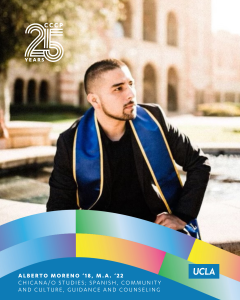 https://cccp.ucla.edu/wp-content/uploads/2026/07/Copy-of-CCCP25thAnniversary_Profiles_1080x1350_Template.pdf-43.png
1800
1440
brenda garcia
https://cccp.ucla.edu/wp-content/uploads/2025/03/CCCP_trim-1.png
brenda garcia2026-07-17 16:38:192026-07-17 17:00:25Alberto Moreno ’18, M.A. ’22
https://cccp.ucla.edu/wp-content/uploads/2026/07/Copy-of-CCCP25thAnniversary_Profiles_1080x1350_Template.pdf-43.png
1800
1440
brenda garcia
https://cccp.ucla.edu/wp-content/uploads/2025/03/CCCP_trim-1.png
brenda garcia2026-07-17 16:38:192026-07-17 17:00:25Alberto Moreno ’18, M.A. ’22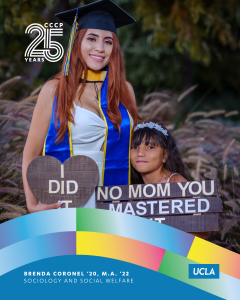 https://cccp.ucla.edu/wp-content/uploads/2026/07/Copy-of-CCCP25thAnniversary_Profiles_1080x1350_Template.pdf-29.png
1800
1440
brenda garcia
https://cccp.ucla.edu/wp-content/uploads/2025/03/CCCP_trim-1.png
brenda garcia2026-07-14 01:36:392026-07-15 00:35:57Brenda Coronel ‘20, M.A. ‘22
https://cccp.ucla.edu/wp-content/uploads/2026/07/Copy-of-CCCP25thAnniversary_Profiles_1080x1350_Template.pdf-29.png
1800
1440
brenda garcia
https://cccp.ucla.edu/wp-content/uploads/2025/03/CCCP_trim-1.png
brenda garcia2026-07-14 01:36:392026-07-15 00:35:57Brenda Coronel ‘20, M.A. ‘22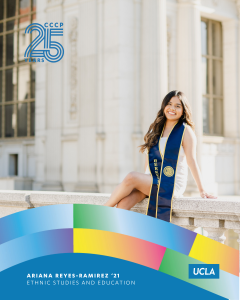 https://cccp.ucla.edu/wp-content/uploads/2026/07/Copy-of-CCCP25thAnniversary_Profiles_1080x1350_Template.pdf-24.png
1800
1440
brenda garcia
https://cccp.ucla.edu/wp-content/uploads/2025/03/CCCP_trim-1.png
brenda garcia2026-07-13 16:57:332026-07-15 16:28:38Ariana Reyes-Ramirez ’21
https://cccp.ucla.edu/wp-content/uploads/2026/07/Copy-of-CCCP25thAnniversary_Profiles_1080x1350_Template.pdf-24.png
1800
1440
brenda garcia
https://cccp.ucla.edu/wp-content/uploads/2025/03/CCCP_trim-1.png
brenda garcia2026-07-13 16:57:332026-07-15 16:28:38Ariana Reyes-Ramirez ’21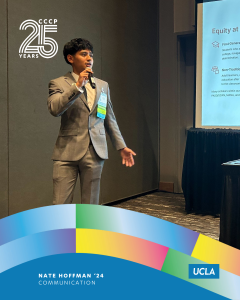 https://cccp.ucla.edu/wp-content/uploads/2026/07/61.png
1800
1440
brenda garcia
https://cccp.ucla.edu/wp-content/uploads/2025/03/CCCP_trim-1.png
brenda garcia2026-07-13 16:56:192026-07-15 16:42:09Nate Hoffman ’24
https://cccp.ucla.edu/wp-content/uploads/2026/07/61.png
1800
1440
brenda garcia
https://cccp.ucla.edu/wp-content/uploads/2025/03/CCCP_trim-1.png
brenda garcia2026-07-13 16:56:192026-07-15 16:42:09Nate Hoffman ’24
Contact Us
310.267.4441
cccp@college.ucla.edu
Open Hours
2211 Campbell Hall (2nd floor)
Los Angeles, CA 90095-7176
Monday – Thursday: 9am – 5pm
Friday (Remote): 9am – 5pm
The UCLA Center for Community College Partnerships acknowledges the Gabrielino/Tongva peoples as the traditional land caretakers of Tovaangar (the Los Angeles basin and So. Channel Islands). As a land grant institution, we pay our respects to the Honuukvetam (Ancestors), ‘Ahiihirom (Elders) and ‘Eyoohiinkem (our relatives/relations) past, present and emerging.
 Curtis Baxter ’12, M.F.A. ’15